Shadu clay from the Konkan riverbeds
Every murti begins with soft, natural shadu clay — kneaded by hand for days until it is silky enough to hold the finest curve of Bappa's trunk. No plaster of Paris, ever.
Eco-friendly · Pickup in DC, MD, VA, Atlanta, Chicago & Seattle · United Cargo airport delivery available
Made from natural, water-soluble clay that dissolves gently at visarjan — sculpted and hand-painted in Pen, Maharashtra. We don't ship murtis to home addresses; collect yours from our pickup points serving Ashburn, Reston, Herndon, Chantilly and Leesburg in Virginia, Washington DC, Ellicott City, Atlanta, Chicago and Seattle, or request delivery to your nearest cargo-enabled airport via United Airlines Cargo.
Browse the murtis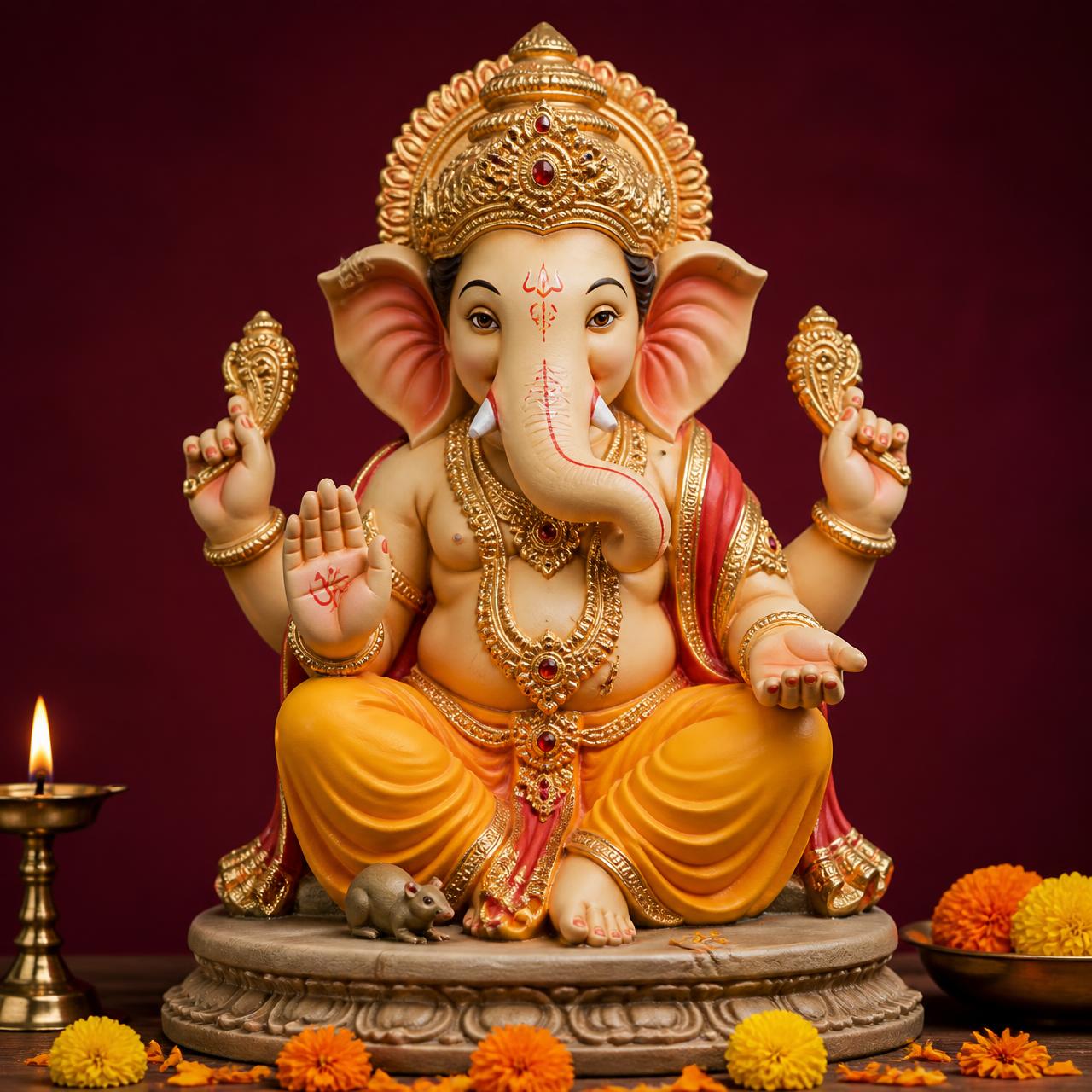
this year's Bappa, straight from a Pen workshop
Handmade in Pen
Maharashtra artisan families
Shadu clay
Water-soluble, no PoP
Pickup or cargo
DC, MD, VA & beyond
United Cargo
Airport delivery available
The collection
Search by name, filter by height, or sort by price — every murti is hand-finished, so no two are exactly alike.
Pickup or United Cargo airport delivery. Clay murtis are too delicate for regular home couriers. Collect yours in person from our pickup points in Ashburn, Reston, Herndon, Chantilly, Leesburg, Washington DC, Ellicott City, Atlanta, Chicago and Seattle, or request delivery to your nearest cargo-enabled airport via United Airlines Cargo. WhatsApp us for pickup or cargo details. Online booking for outside the DC area should be done before September 8th for delivery on time.
Eco-friendly by design
An eco-friendly murti should return to the earth as easily as it came from it. Ours are made only from natural shadu clay and water-soluble colours, so immersion takes minutes, can be done at home in a bucket, and leaves nothing harmful behind in local rivers and lakes.
Every murti is sculpted from shadu mati — the soft river clay of Maharashtra. No plaster of Paris, no gypsum, no chemical hardeners. Just earth, water and the hands of an artisan.
Shadu clay softens within minutes of contact with water and breaks down completely into fine silt. Nothing floats back to the surface, and nothing is left behind to pollute a river or lake.
Place the murti in a bucket or large tub of clean water. Most small murtis dissolve in 20–60 minutes with a gentle stir — no hammering, no cutting, no mess. Larger murtis simply take a little longer.
Pour the leftover clay water into your garden, tulsi pot or backyard soil. Many families keep a plant grown from their Bappa's visarjan water as a living memory of the festival.
Hand-painted with natural, lead-free, water-soluble pigments that are safe around children and dissolve along with the clay — so the colours never leach into the water as microplastics or heavy metals.
PoP idols can sit intact in water for years. Choosing a clay murti keeps the Potomac, Chesapeake watershed and local community immersion tanks clean, festival after festival.
No community tank needed — a bucket of water and twenty minutes is enough.
1 · Fill a bucket
Use a bucket, tub or deep vessel large enough for the murti, filled with clean water at room temperature.
2 · Lower Bappa gently
After the final aarti, place the murti into the water with both hands. Add flowers and offerings if you wish.
3 · Let the clay soften
In 20–60 minutes the clay softens on its own. A slow stir with your hand helps it dissolve evenly.
4 · Return it to the earth
Pour the clay water at the base of a plant, in your garden or in a flower bed — visarjan complete, zero waste.
Pen, Raigad · Maharashtra
Pen is a small town in Raigad district where a remarkable share of India's Ganpati murtis are born. Walk down its lanes in the months before Chaturthi and every doorway opens into a workshop — racks of clay Ganeshas drying in the shade, the smell of wet earth, families working shoulder to shoulder from dawn until late night.
The craft here is generational. Children grow up watching their parents knead clay, learning to judge moisture by touch long before they are trusted with a face. A single murtikar family may make only a few hundred murtis a season, because the crown, the modak, the folds of the dhoti and the curve of the trunk are all shaped and finished by the same pair of hands. The proportions are not measured — they are memorised, passed down through decades of practice.
What sets Pen apart is the face. Pen artisans are known across India for the softness of Bappa's expression — the gentle eyes, the calm half-smile, the delicate fingers raised in blessing. The finest work is in the last hours: whisper-thin gold lines on the dhoti, tiny beads of jewellery painted one by one, and finally the eyes, drawn with a brush of just a few hairs. Artisans in Pen say a murti is only born when its eyes are done, and it is traditionally the most senior hand in the workshop who draws them.
We buy directly from a handful of these family workshops — the ones whose faces are softest, whose gold work is crisp, and who still refuse to use plaster of Paris. No middlemen, no moulded shortcuts. Because everything is hand-finished, no two murtis are identical: a slightly different tilt of the head, a unique pattern on the shela. Each murti that reaches your home carries the fingerprints of the artisan who made it — and a fair price paid straight to that family.
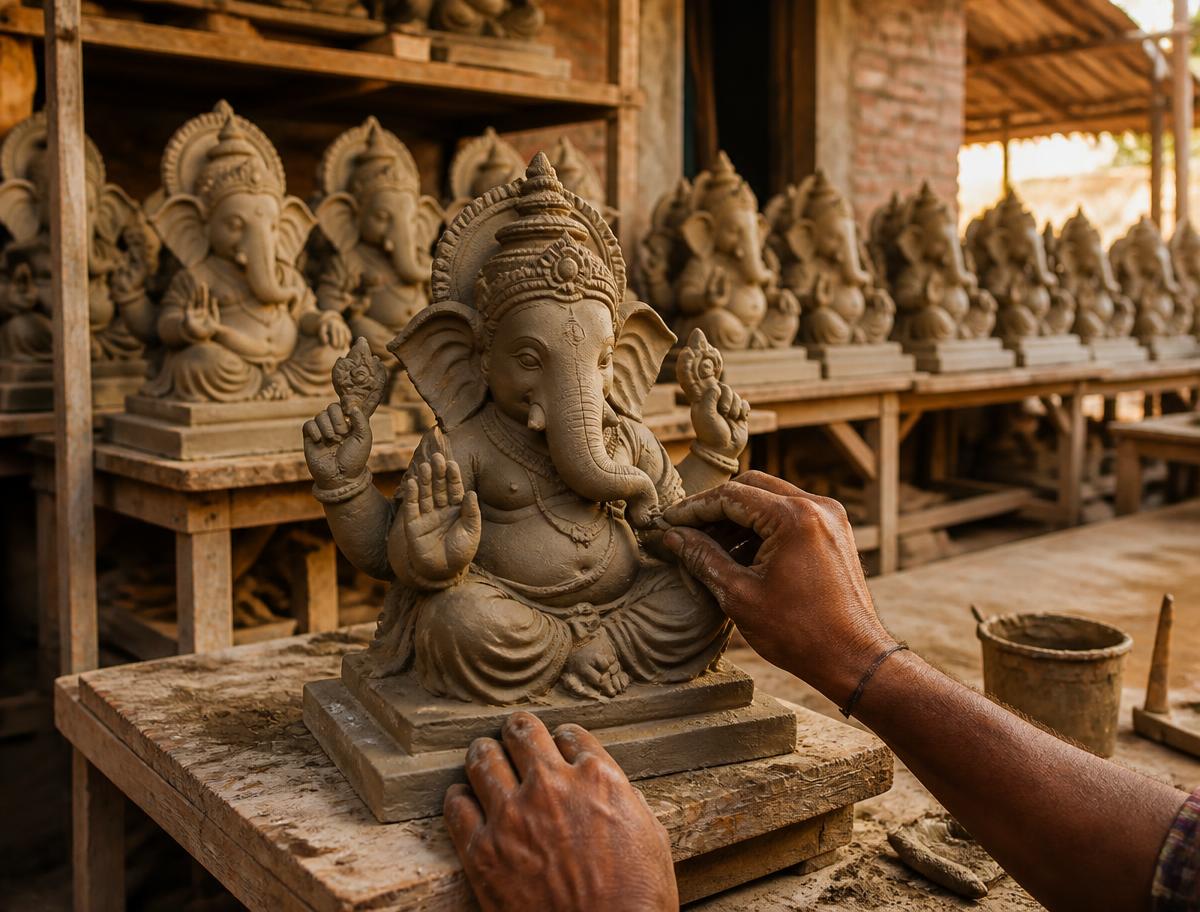
Every murti begins with soft, natural shadu clay — kneaded by hand for days until it is silky enough to hold the finest curve of Bappa's trunk. No plaster of Paris, ever.
In Pen's workshops the craft passes from grandfather to grandson. A single artisan shapes the crown, the modak, the folds of the dhoti — the proportions memorised over a lifetime.
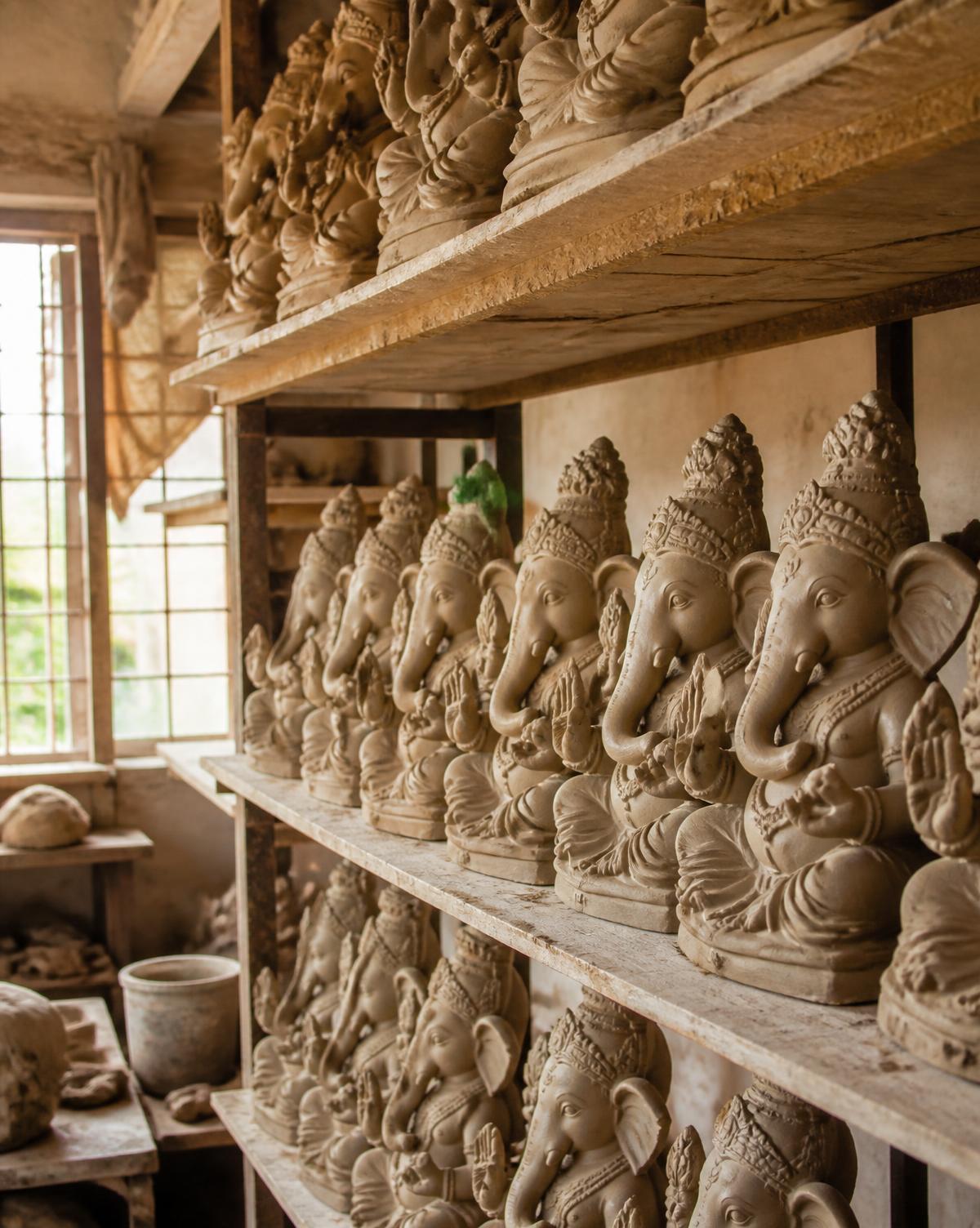
The murtis rest on wooden racks for two to three weeks, drying gently in shade so the clay cures without a single crack before any colour touches it.
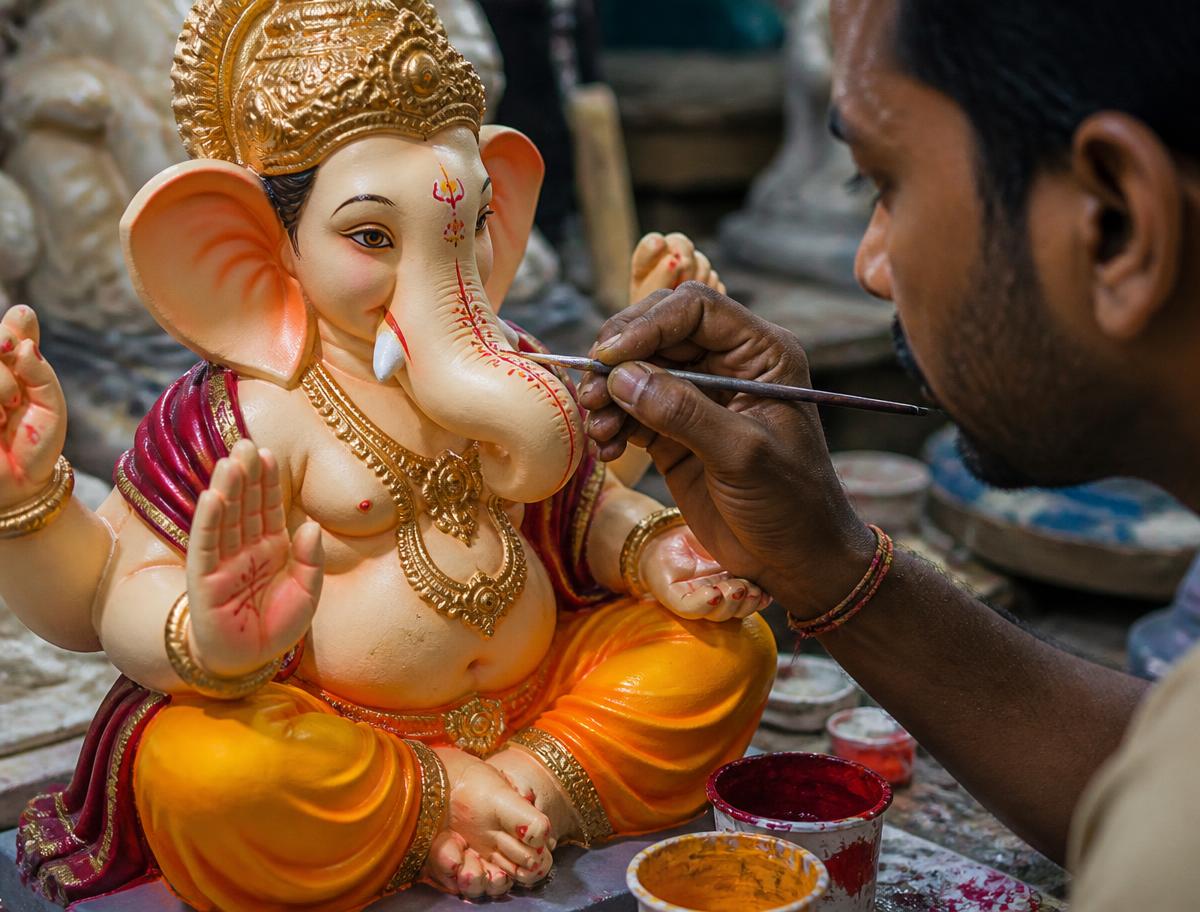
Non-toxic, water-soluble colours are laid on in thin layers. The final stroke is always the eyes — the moment Pen's artisans say the murti truly comes alive.
Pen faces are gentle rather than stern — rounded cheeks, calm eyes, a faint smile. It is the detail collectors recognise first.
Crowns, necklaces and dhoti borders are lined freehand in gold. Look closely and you will see unbroken hairline strokes, never printed patterns.
A shadu clay murti feels lighter than plaster and sounds dull, not hollow, when tapped — and it softens the moment it meets water.
“A murti is not finished when the paint dries. It is finished when a family looks at it and folds their hands.”
Clay idols are too fragile for regular home couriers, so most families collect their murti in person from our pickup points across Northern Virginia — Ashburn, Reston, Herndon, Chantilly and Leesburg — plus Washington DC, Ellicott City MD, Atlanta GA, Chicago IL and Seattle WA. If you cannot visit a pickup point, we can now deliver your murti to your nearest cargo-enabled airport using United Airlines Cargo. Message us on WhatsApp and we'll confirm the best option for your city.
a note from Sameer Phanase, founder of Divine Ganpati
Namaste, I am Sameer Phanase. Divine Ganpati started very simply — I was trying to bring home my own murti from Pen. Once other families heard about it, they asked me to bring one for them too, because they were just as excited about welcoming Bappa home.
What keeps me doing it is the artisans. The families in Pen have shaped shadu clay murtis for generations, and most of them have never had a way to reach homes in the USA. I know them by name, I sit in their workshops, and I carry their work here so that their craft is seen and valued the way it deserves to be.
Trust is the only thing I really have. Every murti is hand-shaped and hand-painted, so no two are ever the same. I show you the actual murti you are getting, I tell you honestly if something arrives chipped before you pay, and I say no when I cannot deliver on time. If you have any question — a size, a colour, or which one will suit your mandap — write to me on WhatsApp. It is me replying, not a robot.
— Ganpati Bappa Moraya 🙏
Sameer Phanase · Founder, Divine Ganpati · Washington DC
things we tell everyone who asks